
After two decades of decline, the most-asked question about Lake Powell is whether it will ever come back. Big winters help a lot, but the long-term math works against a full recovery.
The short answer
Lake Powell can rise — sometimes dramatically in a single year — but a return to full pool at 3,700 feet is unlikely under current conditions. Each strong snow year buys elevation, while a warmer, thirstier basin quietly takes flow back off the top. The most probable future is a reservoir that fluctuates and stabilizes well below full, not one that refills.
What it would take to refill
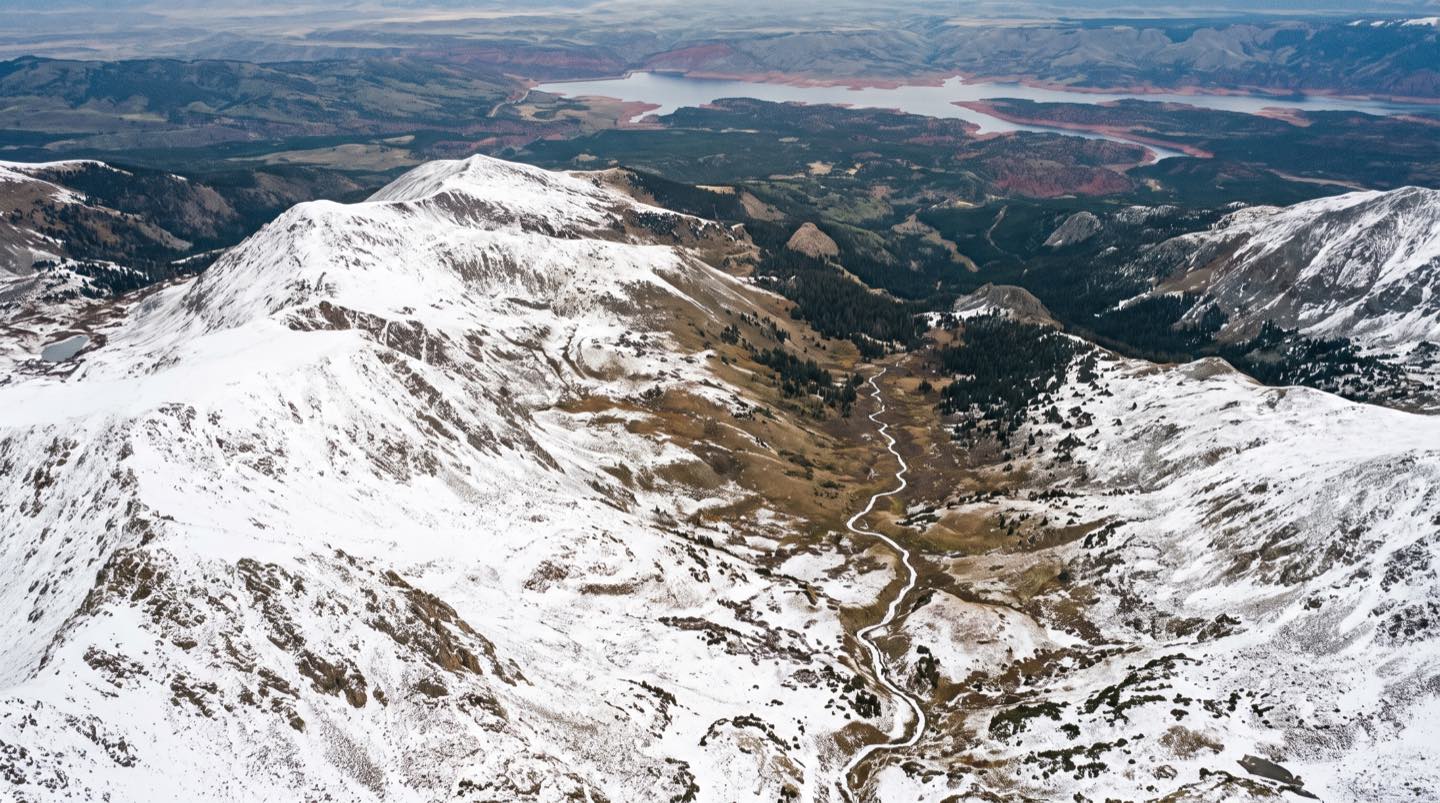
Lake Powell’s water comes almost entirely from mountain snowpack in the Upper Colorado River Basin — the Rockies of Colorado, Utah, and Wyoming. When that snow melts in spring, the runoff pours into the reservoir.
- A well-above-average winter can raise Powell roughly 30–65 feet in one runoff season.
- The exceptional 2023 snowpack (one of the better years of the century) lifted the lake about 65 feet off its April 2023 low.
- But a single good year rarely holds: releases and evaporation draw the water back down over the following dry months.
To actually refill, the basin would need several consecutive big, efficient snow years with reduced downstream demand — the last sustained stretch like that was in the 1980s.
| Scenario | Effect on Lake Powell |
|---|---|
| One well-above-average snow year | Raises the lake ~30–65 ft in a single season (2023 added ~65 ft), but the gain erodes over the following dry months |
| Several consecutive big, efficient years + lower demand | The only realistic path back toward full pool — a combination the basin hasn’t seen since the 1980s |
The 2023 snow year is the clearest recent example. A near-record Upper Basin snowpack lifted Powell about 65 feet off its April 2023 low, the deepest the reservoir has been since it filled — see how low is Lake Powell for where that low sits against the all-time record. By the following spring, releases and a weaker winter had given much of the gain back.
Why a full refill is unlikely
Two structural problems work against recovery:
-
Aridification. The basin is in its driest 20-plus-year stretch in roughly 1,200 years (Williams et al., 2022), and warming is the multiplier. Research led by the USGS (Milly & Dunne, Science, 2020) estimated the Colorado River loses roughly 9% of its flow for every 1 °C of warming, largely because less snow survives to become runoff. Because warming keeps lowering how much snow becomes runoff, even wet years now deliver less water to the reservoir than they used to.
-
A structural deficit. Analyses of basin water use find the system has been consuming on the order of 1.2–1.5 million acre-feet more per year than the river reliably provides. Until deliveries and demand come down to match supply, reservoirs stay under pressure even in good years.
What the official forecasts say
There is no crystal ball, but two forecasts carry the most weight:
- Reclamation’s 24-Month Study projects Powell and Mead elevations two years out under different inflow scenarios. It’s the operational backbone for how much Glen Canyon Dam releases. See a plain-English walkthrough on the forecast page.
- The Colorado Basin River Forecast Center (CBRFC) issues spring April–July inflow forecasts — the single best early read on how big the coming runoff will be.
Both are updated regularly, and both currently frame the future as managing decline and volatility rather than expecting a refill.
Could it hit dead pool instead?
In prolonged dry stretches, the downside risk gets attention too. Dead pool — elevation 3,370 feet — is where water can no longer pass through the dam by gravity. Managers have tools to avoid it, including emergency releases from upstream reservoirs like Flaming Gorge and cuts to downstream deliveries. Track the live cushion on the dead pool page.
For the deeper backstory on how the reservoir got here, read Why is Lake Powell so low?
Sources
- Milly & Dunne, “Colorado River flow dwindles as warming-driven loss of reflective snow energizes evaporation,” Science (2020)
- Williams, Cook & Smerdon, “Rapid intensification of the emerging southwestern North American megadrought,” Nature Climate Change (2022)
- U.S. Bureau of Reclamation — 24-Month Study projections
- NOAA Colorado Basin River Forecast Center — seasonal water supply forecasts
- Reclamation Upper Colorado Region — daily reservoir elevation data (the live figures on this page)